
Melbourne Mold Remediation
When water enters through building envelopes, our certified technicians establish negative pressure containment to eliminate hazardous fungal growth safely. In public discussions, homeowners often describe how heavy rainwater penetration through damaged roofing leaves ceiling insulation sodden and plasterboard sagging, creating structural and mold risks. We stabilize your indoor air quality and protect underlying framing before structural hazards compound.
Questions first? (321) 555-0161.
Prefer to talk? (321) 555-0161
Certified Structural Containment And Timber Restoration
About 63% of housing units in Melbourne, FL (25,564 of 40,311) were built before 1980, the period when asbestos-containing materials and lead paint were still in use.
Our licensed specialists provide comprehensive structural moisture extraction and water damage restoration across the region.
As a pattern echoed in public discussions highlights, topical bleach treatments fail to kill mold roots embedded in damp framing timber, requiring drywall flood cuts and commercial antimicrobial remediation.
Performing DIY water cleanup without commercial drying equipment leaves trapped moisture behind wall cavities, triggering secondary mold blooms.
Homeowners managing coastal flood damage face uncertainty regarding appropriate drywall cut heights and drying times for structural framing to prevent mold.
Our certified technicians perform rigorous cavity moisture tracking and thorough HEPA vacuuming to ensure every stud wall dries down to pre-loss equilibrium.
Step-by-Step Environmental Decontamination
As trade video analyses demonstrate, immediate professional intervention during flood events arrests progressive material degradation and structural hazards to achieve pre-loss condition. For properties affected by severe tropical systems, we integrate specialized storm surge sanitization and muck out services to stabilize the structure.
- Thermal Inspection & Cavity Mapping. Surface moisture readers and thermal imaging cameras are essential to locate hidden water migration routes before establishing a drying protocol. Technicians probe deep sill plates and insulated cavities to measure wood moisture equivalent percentages without intrusive demolition.
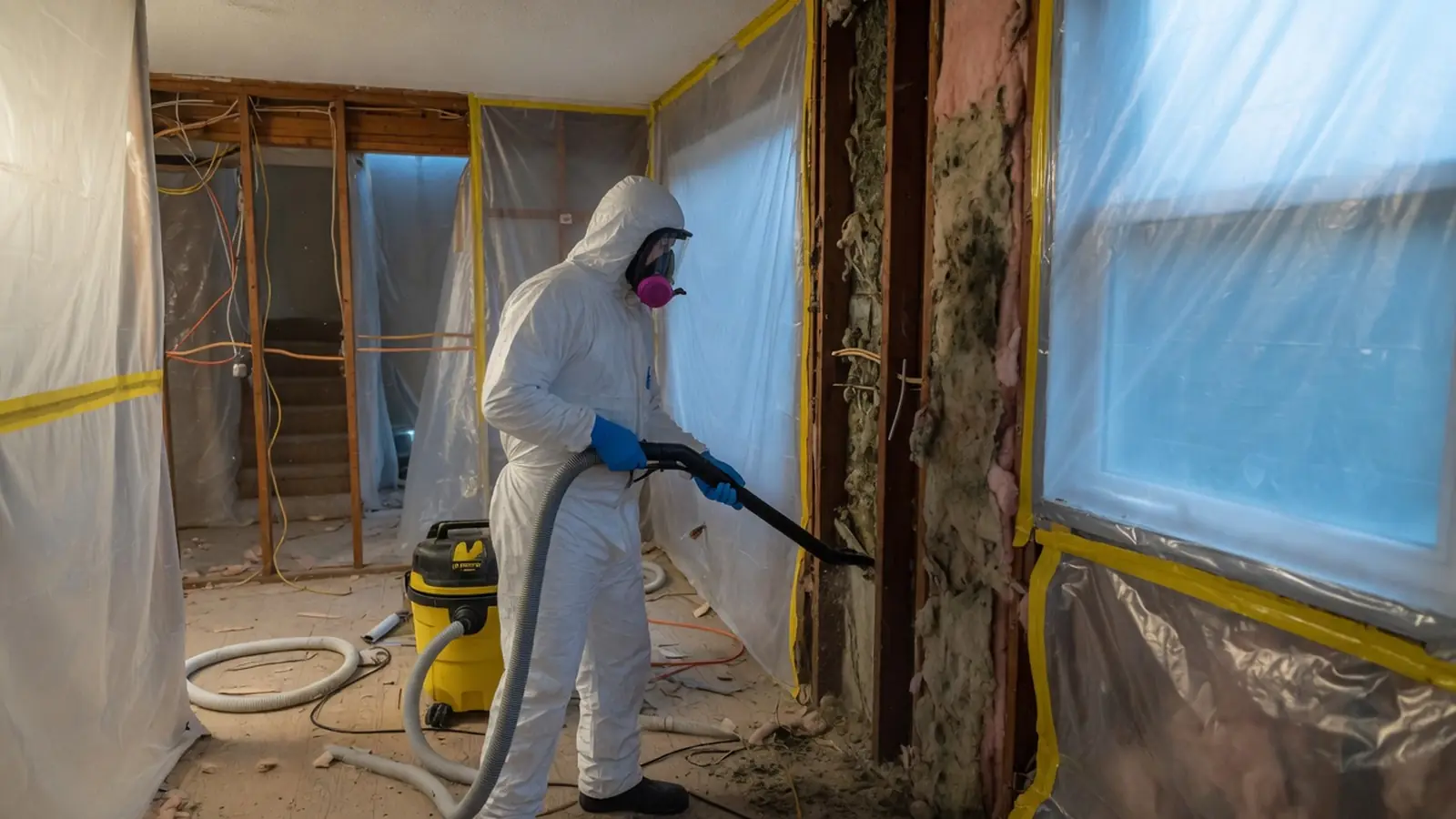
- Sealed Containment & Negative Pressure. Professional mold remediation requires establishing sealed containment zones under negative air pressure with HEPA filtration before disturbing colonies to stop spores from spreading. Continuous air scrubbing ensures unaffected living spaces remain fully isolated from contaminated work zones.
- Controlled Removal & Antimicrobial Wash. Active mold remediation must occur before structural drying or rebuilding begins to prevent forced airflow from spreading spores across unaffected rooms. Contaminated materials undergo precision flood cuts before remaining framing members receive EPA-registered fungicidal treatments.
- Structural Dehumidification & Verification. Commercial LGR dehumidifiers and directed low-grain air movers extract residual moisture until framing reaches safe dry standards. Final visual inspections and post-remediation documentation confirm structural readiness for reconstruction.
Strict Containment Standards Without Compromise
We operate in strict adherence to IICRC S520 remediation standards, utilizing certified HEPA filtration and commercial antimicrobials on every residential project. When storm bands push groundwater indoors, our crew coordinates with our dedicated rapid residential flood cleanup protocol to stop contamination before it reaches subflooring. Our commitment guarantees zero cross-contamination, thorough structural drying, and verifiable indoor environmental safety.
Negative Air Containment
Technicians construct sealed polyethylene physical barriers equipped with HEPA-filtered negative air machines. This standard practice prevents dangerous microscopic fungal spores from migrating into occupied living areas during demolition.
Antimicrobial Framing Remediation
Porous framing timbers undergo targeted HEPA vacuuming followed by commercial fungicidal application and biocide sealants. This detailed process eradicates fungal root structures embedded deep inside wooden studs.
Structural Cavity Drying
Industrial desiccant and refrigerant dehumidifiers extract deep moisture trapped within enclosed floor systems and wall cavities. Rapid moisture removal stabilizes the building envelope and prevents recurring fungal colonization.
Dedicated To Safe Environmental Recovery
Our remediation protocols prioritize containment integrity, thorough moisture removal, and transparent communication throughout every stage of property restoration.
- 12Zip Codes Served
- 6Service Areas
- 3Services Offered
Homeowners rely on our technicians for thorough containment, precision timber treatment, and complete environmental safety. Here is what local property owners say about how the crew handled their mold emergencies and structural recovery.
“Instead of tearing down all the surrounding wallboard, the team explained how targeted flood cuts combined with a penetrating antimicrobial wash would save the sound structural framing. They recommended mold-resistant backing board for the rebuild, which cut replacement expenses significantly while guaranteeing long-term durability. The entire remediation stayed within my planned budget without cutting safety corners.”
Garrett K.
“When torrential afternoon thunderstorms knocked out power to our street, the crew brought in auxiliary generator units so the negative air scrubbers never stopped filtering. They adjusted their shift rotation immediately and recovered lost drying hours by morning. Their swift reaction prevented elevated humidity from spreading airborne contaminants into our bedrooms.”
Valerie P.
“Our subdivision architectural board demanded strict containment of all discarded drywall debris and questioned the exhaust venting near the shared driveway. The crew parked their filtration exhaust discreetly, wrapped every removed panel in sealed poly bags before carrying it out, and answered every association question with complete professionalism. The board was thoroughly impressed with the tidy job site.”
Derrick N.
“Six months after their HEPA containment work and deep timber drying, our living room feels completely fresh even through the stickiest summer heat. That stale, damp smell behind the baseboards has never returned, and our independent follow-up air quality test came back spotless. Living here with complete peace of mind has made all the difference for our family.”
Brenda T.
Frequently Asked Questions
Is it safe for my family and pets to remain living in the house while mold containment barriers and remediation equipment are running?
Occupants should vacate active containment areas while negative air machines run to prevent accidental exposure to agitated airborne spores. Sealed poly sheeting under negative pressure isolates the remediation zone, allowing unaffected portions of the home to remain occupied when ducted outdoors.
How much does professional mold remediation typically cost for residential properties?
Project expenses depend strictly on the square footage of damaged drywall, required containment barriers, and total structural drying run time. Because every remediation job requires clear containment protocols and controlled negative air pressure, an onsite assessment provides accurate scope estimates.
How long does the mold remediation and drying process take from start to finish?
Standard remediation protocols require several days to complete physical removal, antimicrobial scrubbing, and deep structural dehumidification. Drying times vary based on timber saturation levels, ambient coastal humidity, and the extent of trapped moisture behind wall cavities.
Can I kill mold on wooden studs using household bleach instead of professional removal?
Topical bleach fails to penetrate porous wood fibers, leaving embedded mold roots alive to recolonize framing once moisture levels rise again. Proper remediation requires cutting back affected drywall, physical HEPA vacuuming, and treating framing with commercial antimicrobial agents.
What building safety precautions apply to older homes undergoing mold remediation?
Pre-1980 residential structures require hazardous material screening for lead and asbestos before cutting into plaster or textured drywall. Testing ensures demolition work does not liberate airborne mineral fibers while technicians remove contaminated insulation and framing materials.